 The Amber Archive
FIELD NOTES FROM THE ARCHIVE
Very old things. Fresh perspectives.
Stories, collecting ideas, and the science that keeps us looking closer.
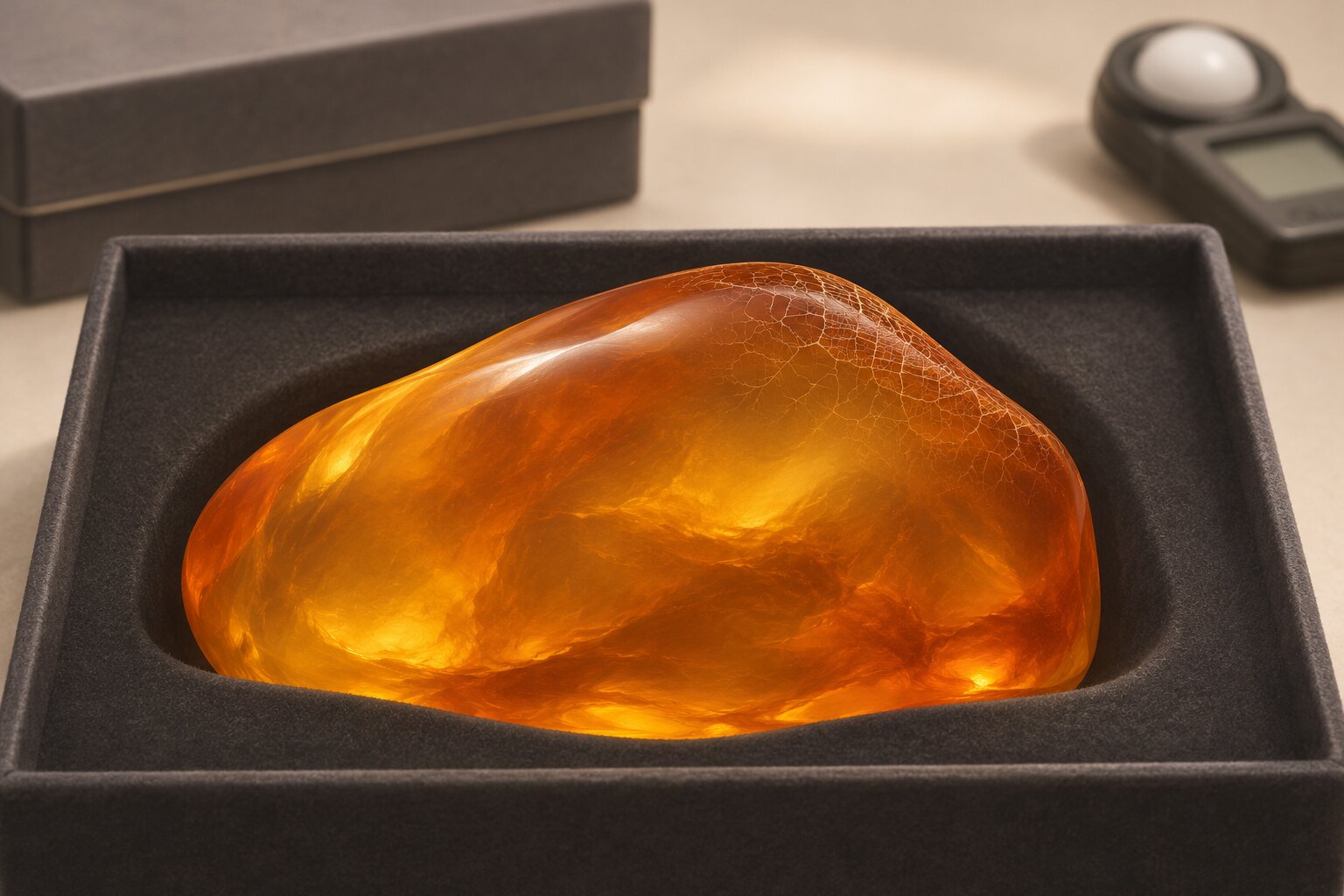
Why amber cracks: what crazing means and how to slow it
Why does amber crack? Learn what surface crazing looks like, why light and environmental changes matter, and how collectors can reduce further damage.
Read the story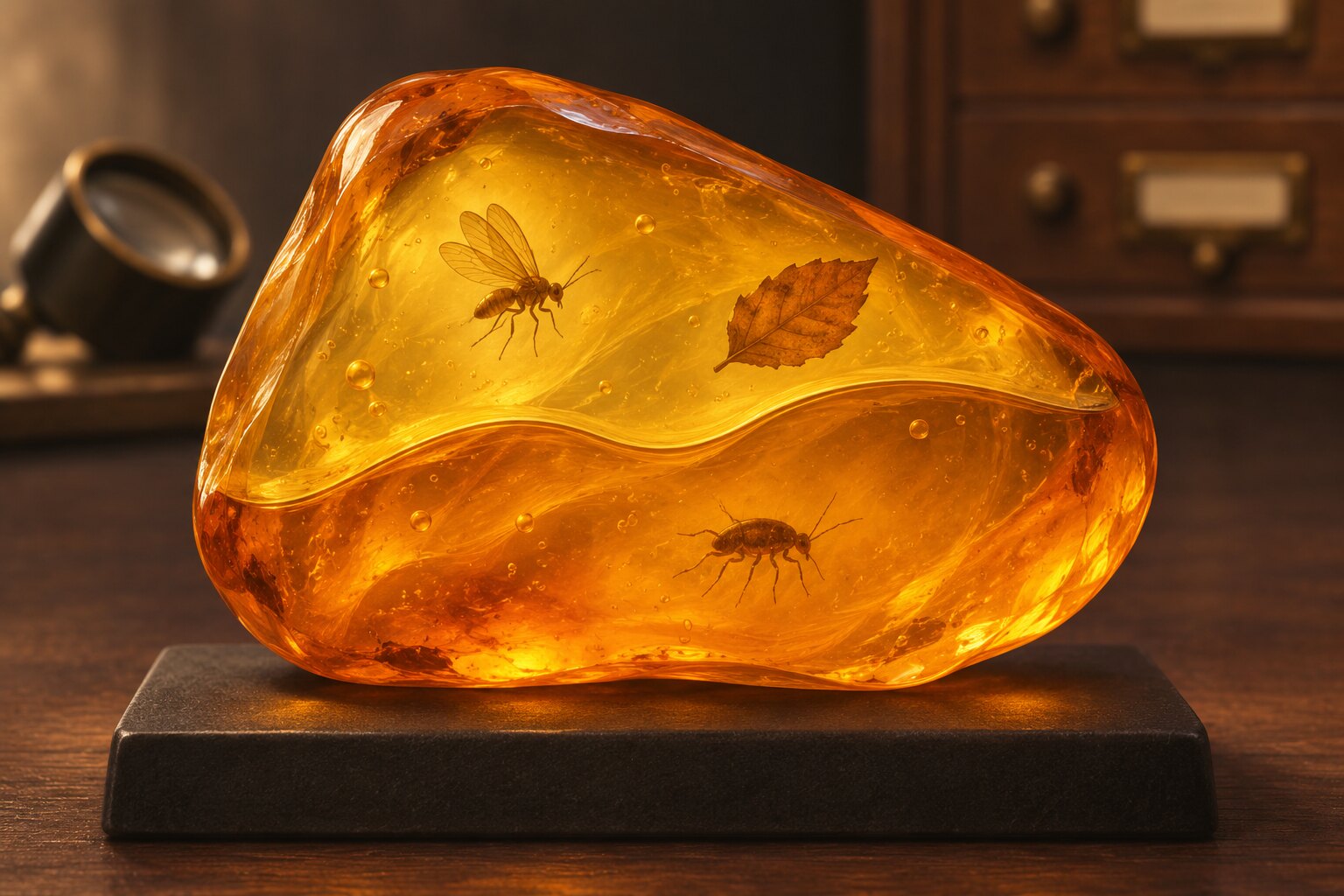
Multiple inclusions in amber: one scene or several moments?
Multiple inclusions in amber may share one resin flow—or several. Learn how layers, position, and context separate a true scene from a tempting story.
Read the story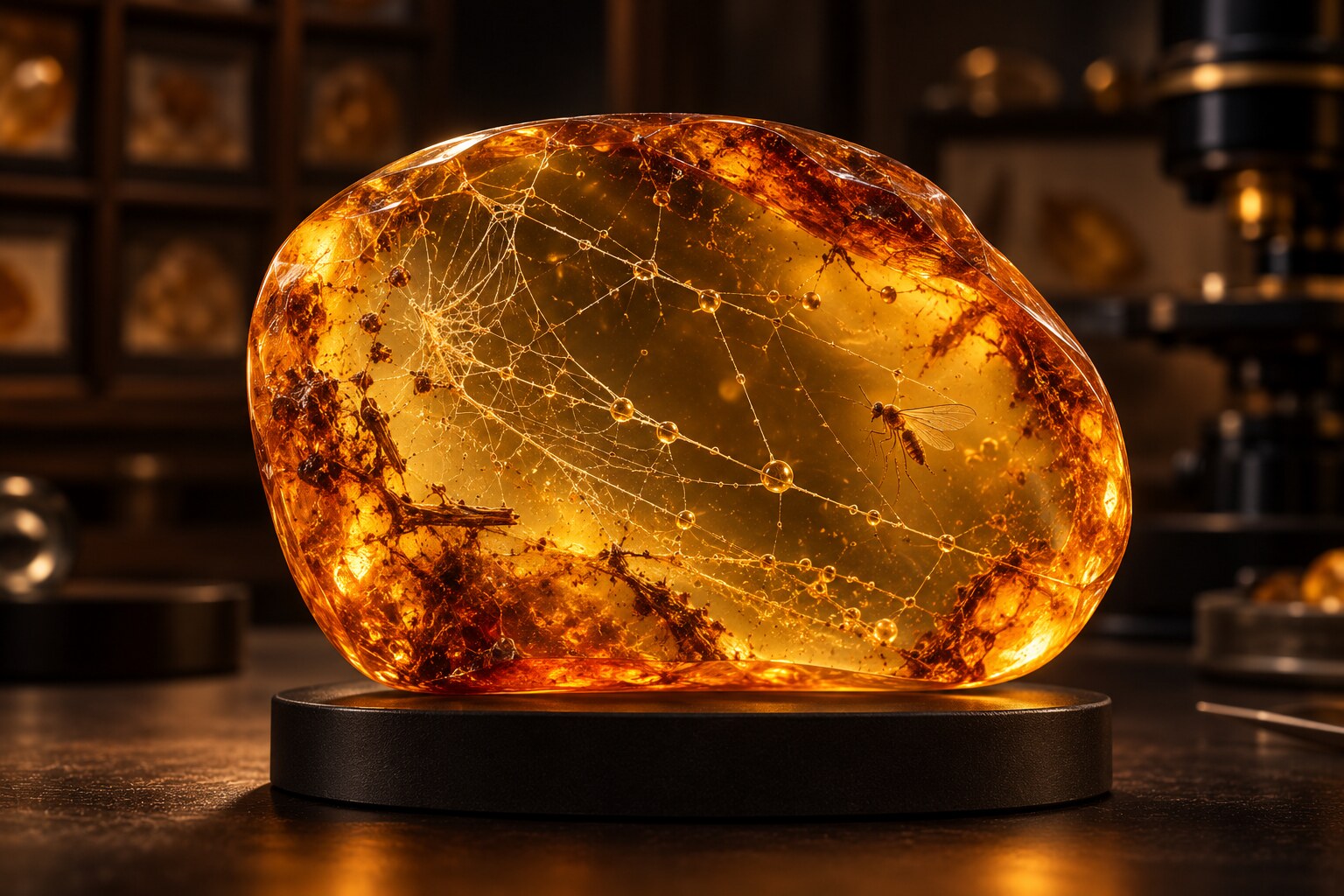
Spider webs in amber: how scientists recognize ancient silk
Ancient silk can survive in amber, but one pale filament is not automatically a web. Learn how droplets, geometry, prey, and imaging strengthen the case.
Read the story
DNA in amber: can it really survive millions of years?
No reproducible study has confirmed authentic DNA millions of years old from amber. Here is what researchers found—and what collectors should conclude.
Read the story
Feathers in amber: what do they really show?
Feathers can survive in amber, but a loose filament is not automatically a dinosaur feather. Learn what anatomy, context, and careful wording can establish.
Read the story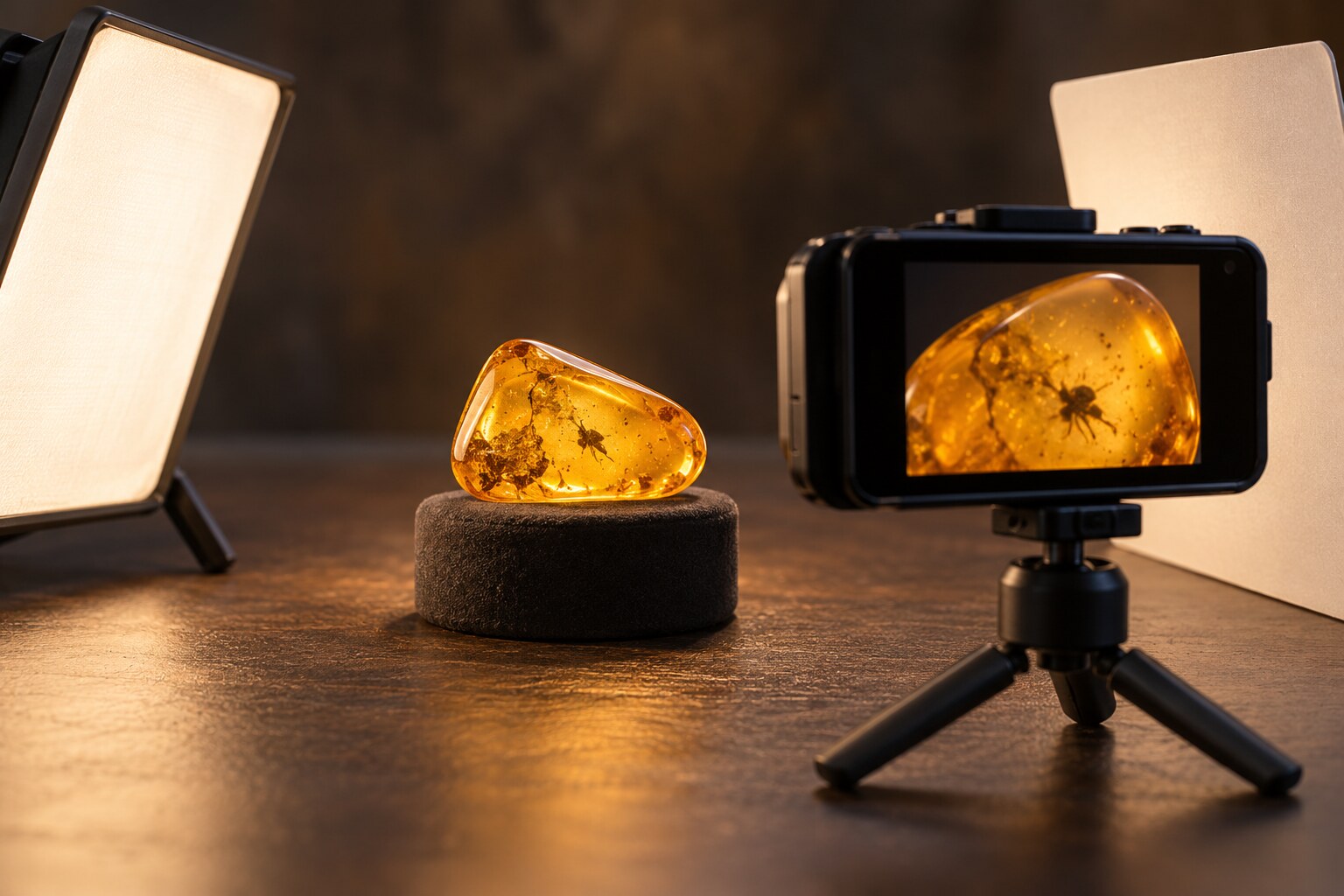
How to photograph amber inclusions clearly
Learn how to photograph amber inclusions with steady support, controlled light, honest focus, and a record that preserves what the camera can—and cannot—show.
Read the story
Amber vs. copal: what is the difference?
Amber and copal both begin as tree resin. Learn how maturity, chemistry, age, and evidence shape the distinction—and why appearance alone is not enough.
Read the story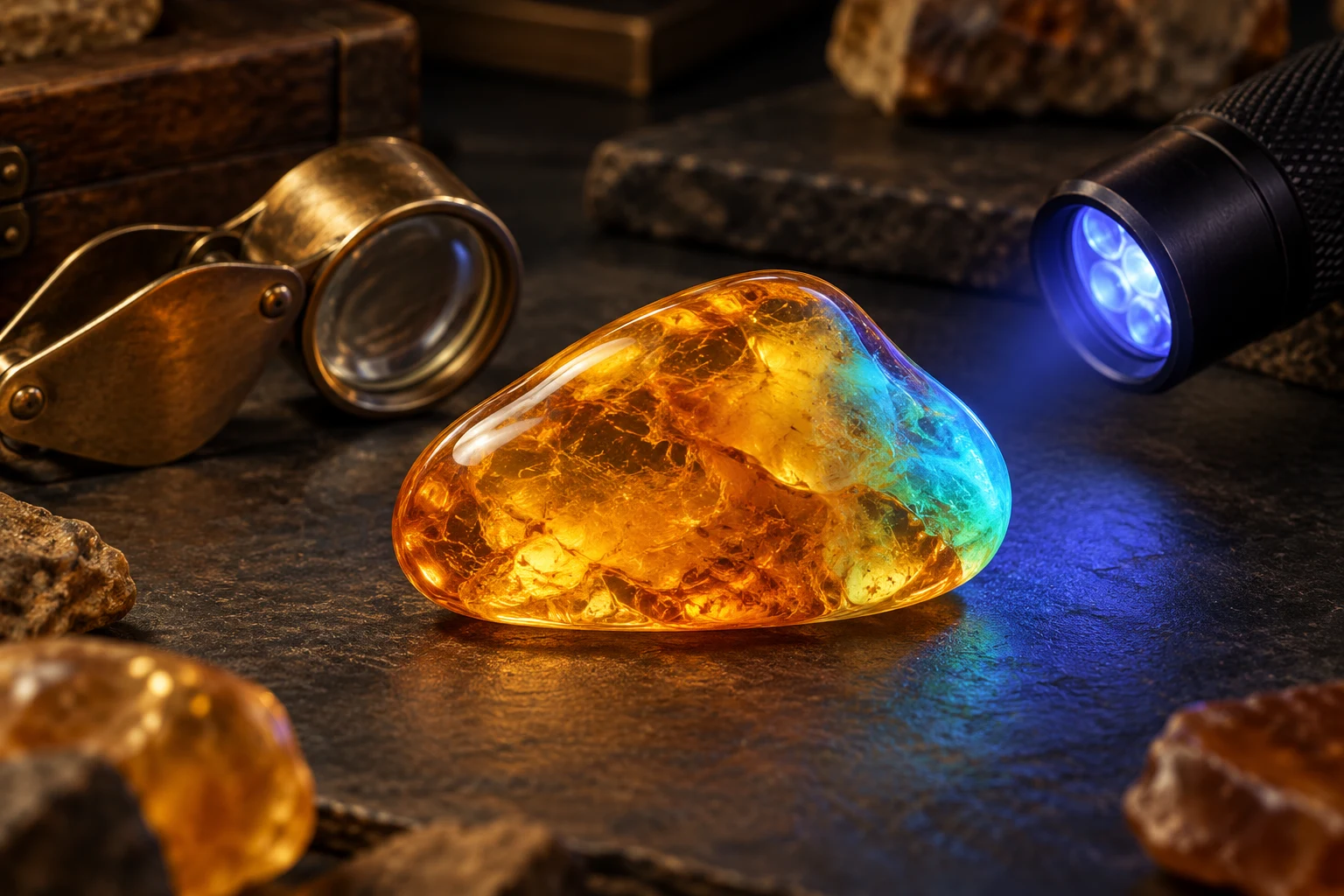
Amber authenticity tests: what UV light and saltwater can tell you
Can UV light or saltwater prove amber is real? Learn what these home tests reveal, what they miss, and when an independent laboratory report can help.
Read the story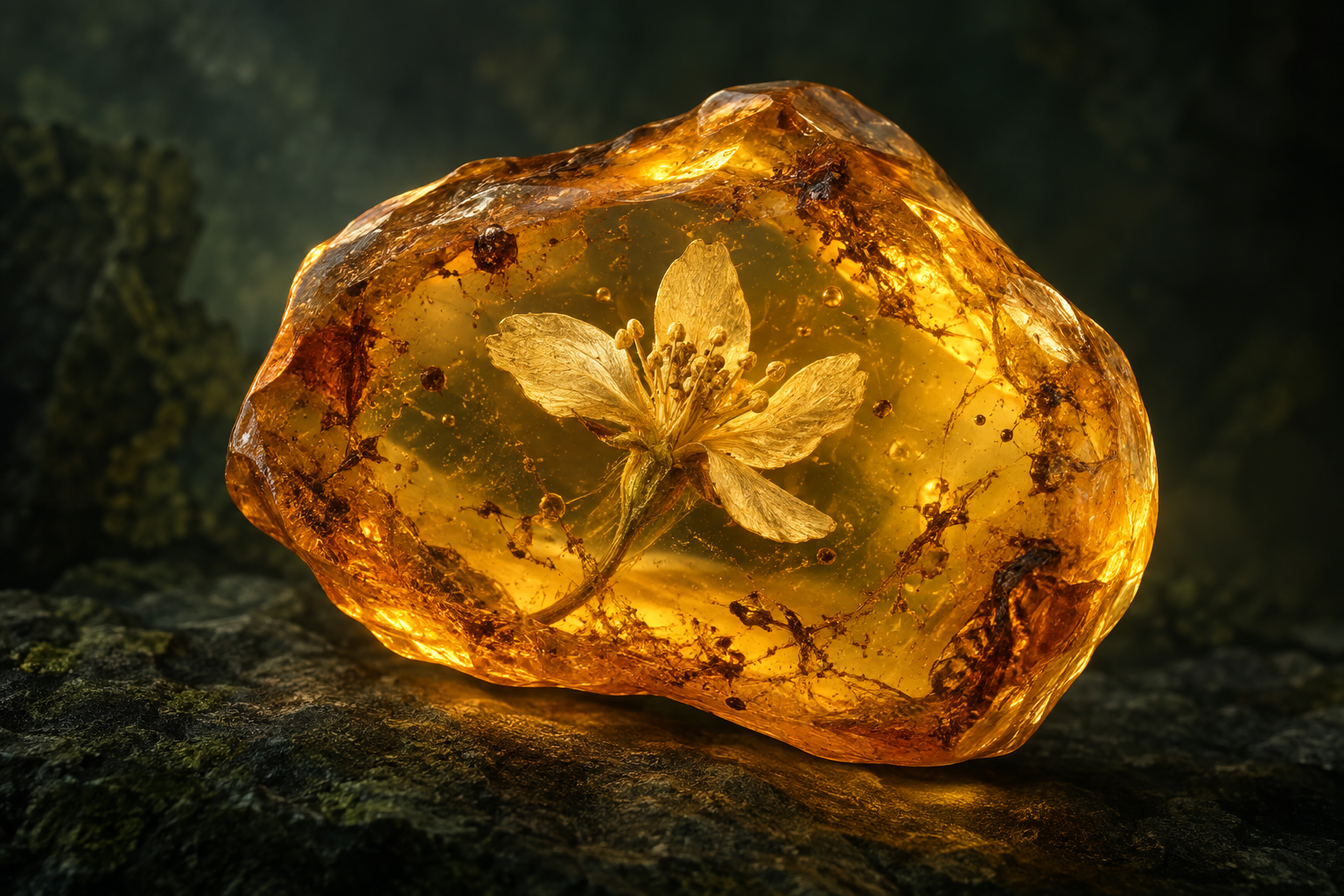
An ancient flower, a new name: why amber identifications can change
A remarkable Baltic amber flower was reidentified after researchers examined its pollen. Here is what that discovery teaches us about reading fossil claims.
Read the story
Start with curiosity. Build a collection worth looking at.
A practical first entry in your amber notebook, from photographs to questions you have yet to answer.
Read the story