 The Amber Archive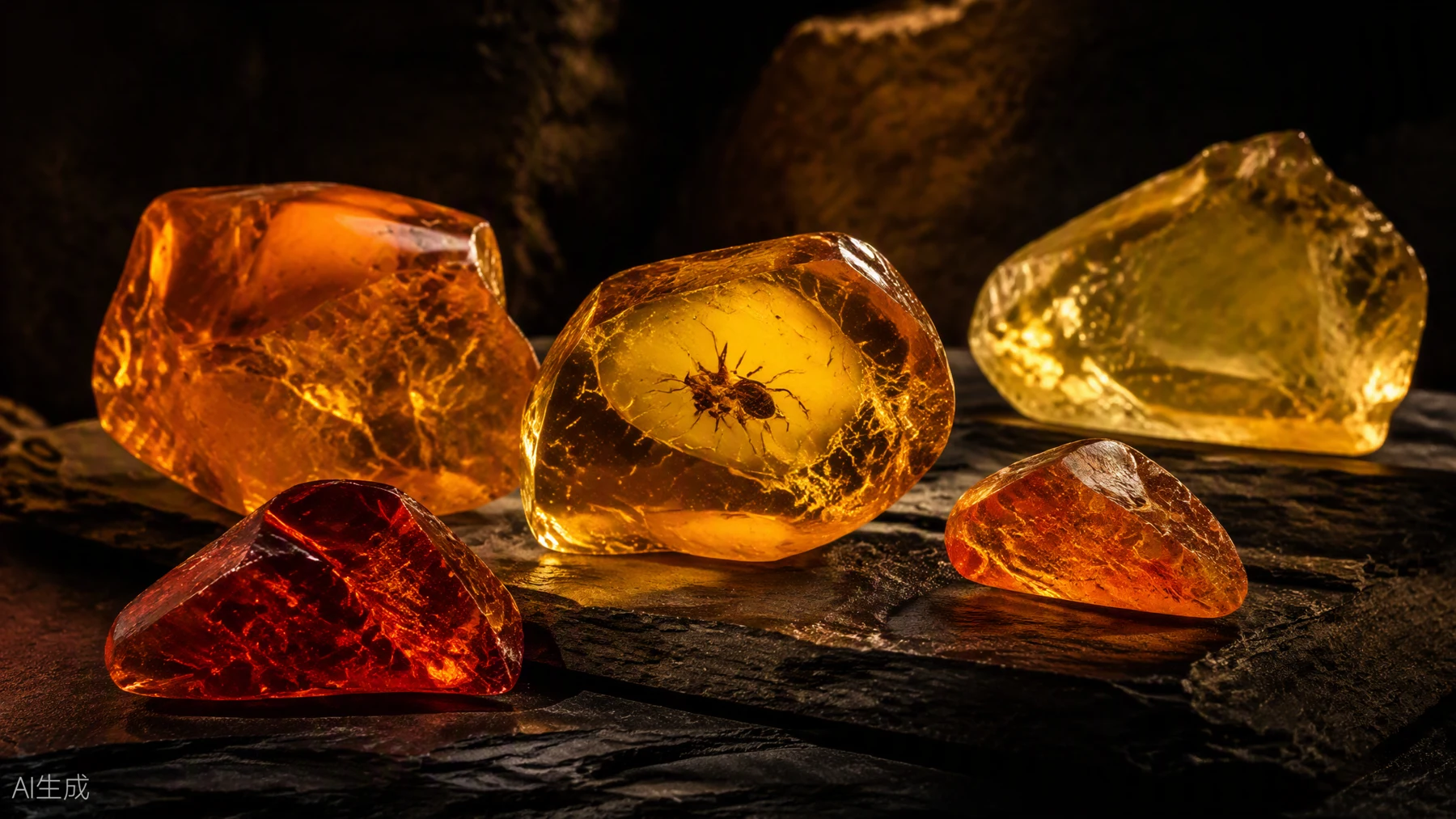
A piece of amber is easy to mistake for a gemstone that grew in the ground. Its story begins with a tree. Amber is fossilized resin: an organic material that has changed over geological time, sometimes preserving tiny traces of the world around it.
A name with a place behind it
Burmite is the traditional name for amber from Myanmar, formerly Burma. Much of the material associated with the Hukawng Valley in northern Myanmar is known for its Cretaceous inclusions. The often-quoted age of about 99 million years refers to a dated deposit, not a laboratory measurement made on every specimen offered for sale.
That distinction matters. A country name alone does not establish the precise age or origin of an individual piece. Keep the seller’s locality information, photographs, and any documentation with the specimen.
What is an inclusion?
An inclusion is something enclosed within the amber. It might be an insect, plant material, a bubble, or another small remnant. Not every dark mark is an animal, and not every visible animal can be identified to species. A careful description separates what can be seen from what is inferred.
Looking closer
Begin with the overall piece, then change the angle of the light. Look at the inclusion from more than one side. A single photograph may hide cracks, obscure a leg, or make two overlapping shapes look like one.
The pleasure of collecting is often in these small observations. A modest specimen with a clearly visible inclusion can be more rewarding than a dramatic label with little evidence behind it.
Have a particular piece in mind? Ask us about the photographs, visible features, and provenance before choosing it.