 The Amber Archive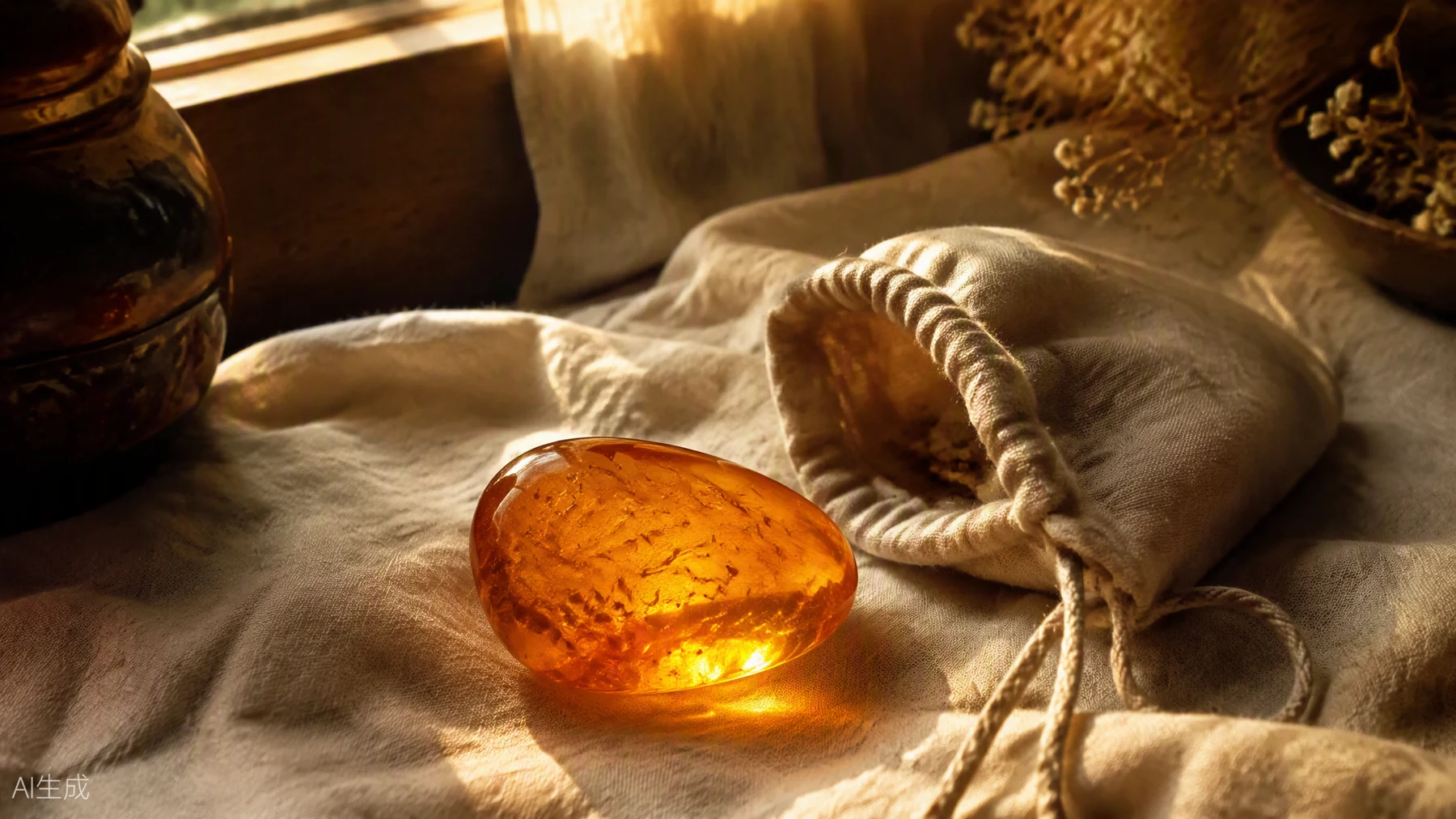
Amber has survived an extraordinary journey, but that does not make its polished surface indestructible. Thoughtful handling helps you keep a specimen enjoyable to study and display.
Keep cleaning gentle
GIA advises warm water with mild soap for cleaning amber. Avoid ultrasonic and steam cleaners, heat, and chemical cleaners. Amber is relatively soft and can scratch, so abrasive polishing products are a poor choice for routine care.
For a delicate inclusion specimen, especially one with fractures or repairs, ask a qualified conservator or the seller before cleaning it. A display piece is not necessarily suited to the same treatment as a simple bead.
Give it its own space
Keep each piece in a separate padded compartment so it cannot rub against other specimens. Put the label and purchase record beside it. The physical specimen and the information that accompanies it belong together.
Make observation easy
Prepare a clean, uncluttered surface before taking a piece out. Support it while examining it and return it to its compartment when you are done. Take photographs of the whole specimen as well as the inclusion; the overall shape makes it easier to match your notes to the right piece later.
If something changes, such as a new crack or a loose fragment, stop handling the specimen and ask for advice. A small issue is easier to assess before someone tries a home repair.